

On MLK Day
Memories of Memphis

[From a piece written in Memphis on June 25, 2007 during a visit with my friend Milton Moreland, now president of Centre College.]
First stop of course was the River. The first time I ever saw this river was at dusk, and it was dusk again as we went down to the riverwalk. She was as majestic as ever, and we had her all to ourselves. We walked over the old cobblestones that lined the bank, and I got in up to my knees. I could feel the pull of time and hear the voices of all those who belonged to the river. From the Creeks and Choctaws DeSoto murdered with his dogs to the Americans whose lives were lost trying to make a living off of something so much bigger than they were. I heard the voices of those who had made it across, both ways, and those who had only come to the edge of this threshold and turned back toward home. I stirred the water with my hand, and it looked and felt like chocolate, but there were too many stories in it to hold, and all I did was make a few surface and float past my legs. I am always oddly comforted by something so much bigger than me. Maybe because it relieves me of the burden of figuring it all out, and all I need to do is flow.
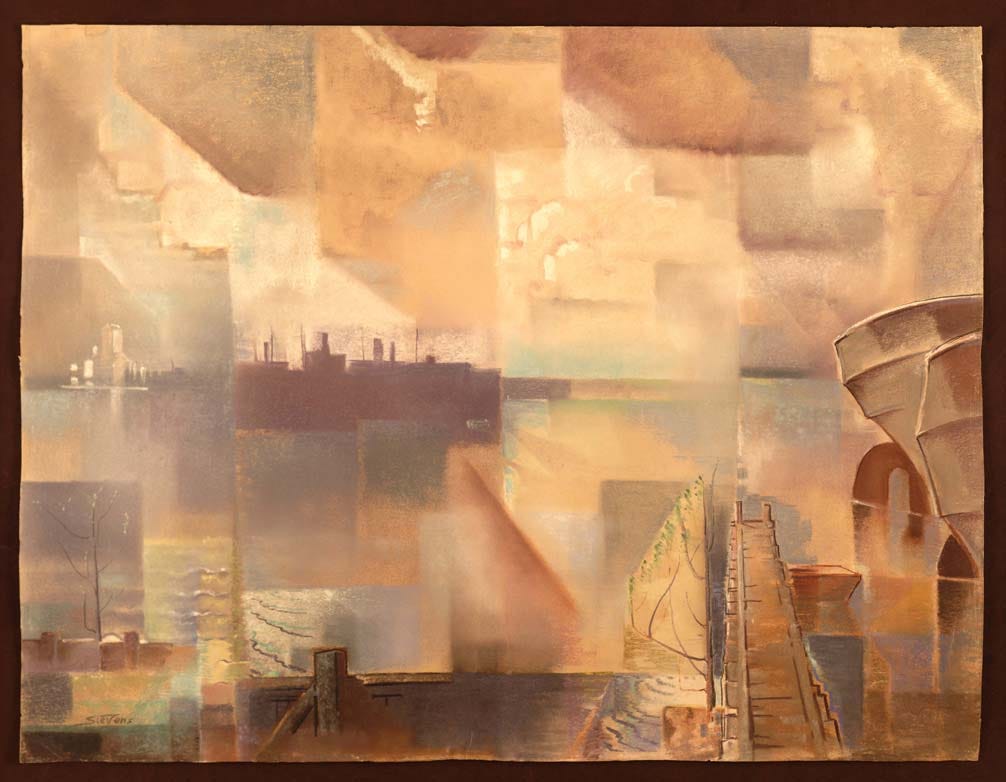
Will Henry, Abstract Mississippi River, 1942
I came out of the river covered in its mud, and we headed up to the bluffs to walk. It was an amazing evening as we walked the nearly empty sidewalk in front of swanky new condos and homes. Milton was in his element as he told me of his adopted home town, and it was nice to just listen without commenting to the stories of cotton, politics, land, and people. We turned off the riverwalk and headed into a part of town that was completely abandoned. Old, industrial buildings that had begun as supporting enterprises for the cotton trade sat hulking in the odd downtown lighting, and we were the only living, moving things on the street for blocks. It had been a long time since I had walked through a city at the wrong time and in the wrong place, and it felt good, but I was glad Milton was with me. Once we left the river, I was completely disoriented and would have had a difficult time finding my way anywhere, an unusual occurrence for me. Suddenly, we come out on a street where there was a firehouse, and down below the firehouse was the Lorraine Motel, where Dr. King was shot. The place is eerie enough with all the historical and cultural ghosts about, but to come upon it like this was surreal. No one was around except a guy who was weed-eating the grounds. I wondered why someone would do that this late, but there were other things to think about. A white wreath hangs on the balcony above room 306 where King was staying, and a dim light in the building across the street revealed the coward’s perch where he took out a prophet. Coming upon that place in the early hours of the lonely night is a memory that will remain etched in my mind, and I carry it well.
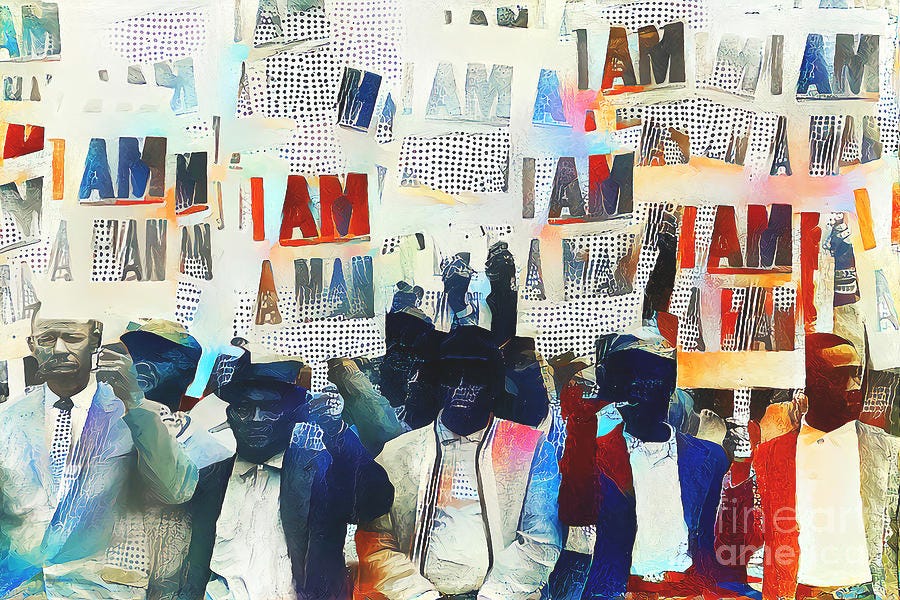
Civil Rights Movement Memphis Sanitation Strike 1968, I Am A Man 20201123 is a photograph by Wingsdomain Art and Photography
We then made our way back to Beale, past the Gibson Guitar factory, and found the Blues Juke Joint, also known as the W.C. Handy Hall, where Dr. Feelgood Potts was holding court with his band. We listened to an entire set and drank Blue Moons while Dr. Feelgood blew his harmonica, and “The Ice Queen,” a young woman “all the way from Osaka, Japan,” played bass like it was a Zen meditation. It was a nice evening, and when I dropped in an appropriately nice tip, Dr. Feelgood noted the amount and said it was from Boston, Massachusetts, and the crowd roared. Of course the crowd roared at every little thing Dr. Feelgood did because he punctuated every song with the phrase “Somebody scream!” And we did.
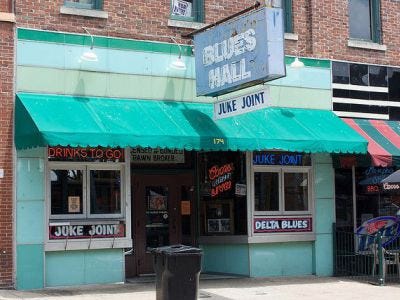
These were the voices of the river on a Sunday night in Memphis: the raucous ones in the juke joint, the soft ones in the river, and the silent ones at the Lorraine Motel.